A locked safe you cannot open is a strange kind of problem. The contents are right there, a few inches away, behind a door built specifically to stop people from getting through it. Most owners assume the only way in is to cut the safe apart and buy a new one.
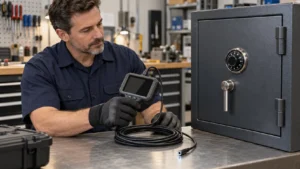
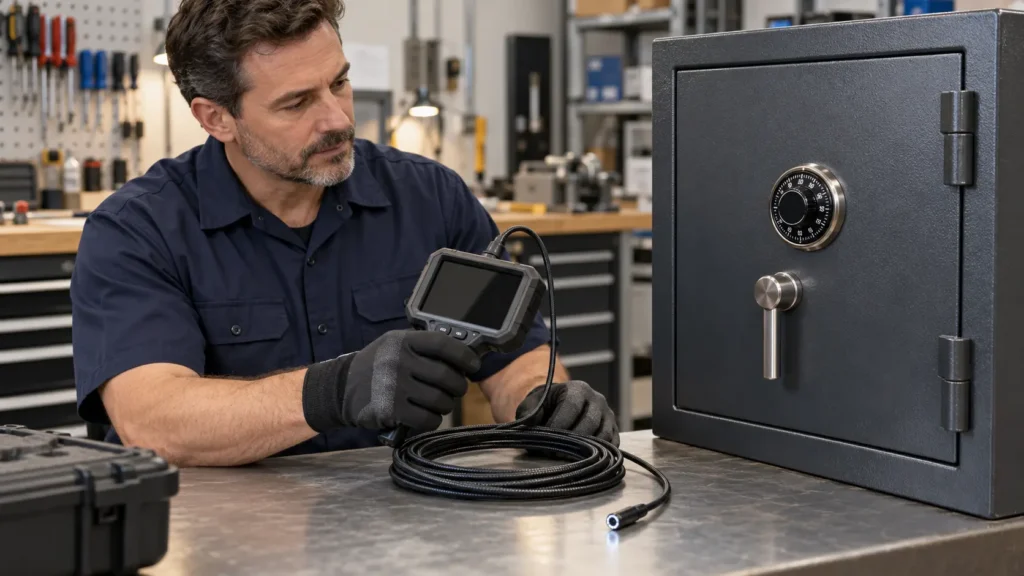
That is rarely what happens. When normal entry methods do not work, a safe locksmith in NYC may use a borescope to access the lock mechanism without cutting the safe apart. A borescope is a thin camera on a flexible probe. The locksmith drills one small hole at a point specified by the manufacturer, inserts the scope to see the lock mechanism inside, then works the mechanism directly to release the bolts. Afterward, the hole is repaired, and the safe goes back into normal use. Whether this approach works depends on the safe’s make and model, its security rating, and the condition of the lock inside.
Understanding what the process involves makes it easier to judge a quote and to know whether the person at your door actually knows what they are doing.
What A Borescope Actually Is
A borescope is an inspection camera built for looking inside things that cannot be taken apart. Engine mechanics use them to inspect cylinders, plumbers use them inside pipes, and safe technicians use them to see the inside of a lock without opening the door.
The tool has three parts that matter here:
- The probe: A thin flexible or rigid tube, often only a few millimeters across, that fits through a very small hole.
- The light source: The inside of a safe is completely dark, so the scope carries its own illumination at the tip.
- The display: Older scopes use an eyepiece, while current ones send the image to a screen, which makes the work faster and more accurate.
What the technician is looking for is the state of the lock mechanism. On a mechanical combination lock, that means the wheel pack and the position of the gates. On a digital lock, it usually means the solenoid or the bolt assembly that failed to retract. Seeing the mechanism turns guesswork into a straightforward job.
Read More: What Is a Depository Safe and How Does It Work?
Why Damage-Free Entry Matters More Than People Expect
The alternative to scoping a safe is cutting it open, and the difference between the two goes beyond the appearance of the door.
| Aspect | Borescope Method | Cutting the Safe Open |
|---|---|---|
| Time on site | Usually a single visit | Longer and far messier |
| The safe afterward | Repaired and reusable | Written off |
| Contents | Untouched | At risk from heat, sparks, and debris |
| Fire rating | Preserved when repaired properly | Can be compromised |
| Replacement cost | None | Full cost of a new safe |
For a small home safe, replacement may be an acceptable outcome. For a TL-rated commercial safe, a gun safe, or a heavy floor-anchored unit in a Manhattan building, replacement means buying new equipment and arranging removal and installation of something that may weigh several hundred pounds. The economics change completely at that point.
There is also the question of what is inside. Cutting generates heat and metal debris, and documents, media, and certain valuables do not survive that well.
What Happens During A Safe Opening
A professional safe opening follows a predictable sequence, and very little of it involves drilling.
-
Identification
The technician establishes the make, model, and lock type of your safe, along with its rating if it carries one. This determines everything that follows, since a manufacturer’s approved access route differs from one model to the next. For SentrySafe units, the manufacturer also provides product manuals to help owners identify and reference their specific model.
-
Non-invasive attempts first
Before anything is drilled, the technician checks the simple explanations. Dead batteries, a lockout timer that has engaged after too many wrong entries, a jammed handle, or a combination entered slightly wrong all account for many common safe lockout situations. Many safes open at this stage with nothing more than a battery change or a correct entry sequence.
-
Manipulation where the lock allows it
On some mechanical locks, an experienced technician can read the mechanism through the dial and open the safe without touching the body at all. This takes patience and is not possible on every lock.
-
Scoping, if the first three steps do not work
Only now does a hole get made, at a location the manufacturer specifies for exactly this purpose. The scope goes in, the technician sees the mechanism, and the lock is released directly.
-
Repair and restoration
The access hole is plugged, and any relocking device that triggered during the work is reset. Done correctly, the safe is secure again and ready for normal use.
At NY City Safe, our technicians work through that order on every call, because the fastest opening is the one that never needs a drill. Our lockout specialists use customized techniques and modified tools to open a safe or vault without unnecessary damage, which means you keep using the safe you already own.
When Scoping Works and When It Does Not
A borescope can be an effective option for many safe lockouts, though not all of them.
Good Candidates
- Standard home and office safes: Lost combinations, forgotten codes, and dead electronics are the everyday cases.
- Digital safes with a failed component: A solenoid or keypad failure leaves the safe mechanically sound and simply unresponsive.
- Fire safes and gun safes: These are worth preserving, and a properly planned opening can avoid the extensive cutting that could otherwise affect the safe and its contents.
- Older mechanical safes: Wheel packs drift, and dials wear, both of which are visible through a scope.
Harder Cases
- High-rated burglary safes: A TL-30 or TRTL-rated safe is built specifically to resist tools, which makes the work slower and more specialized.
- Safes with damaged relockers: A triggered relocking device adds a second problem to solve before the door will move.
- Units with no identifying marks: Without a make and model, the manufacturer’s access data is unavailable, and the job becomes considerably harder.
- Safes someone already attempted: Previous drilling in the wrong place often triggers relockers and complicates a job that would otherwise have been routine.
That last point deserves attention. A safe that has been drilled at random by somebody guessing is a much more expensive problem than one that was left alone.
What Happens to Your Safe Afterward
The repair is part of the job, not an optional extra, and it determines whether the safe is still worth keeping.
- The hole gets plugged: Usually with a repair appropriate to the safe’s construction and security requirements, rather than a cosmetic filler.
- Relockers get reset: Any secondary locking device that fired during the work is returned to its ready position.
- Lock gets serviced or replaced: If a failed component caused the lockout, leaving it in place means another call later.
Asking a locksmith how they intend to repair the safe before work begins is reasonable, and a straight answer is a good sign.
Choosing a Safe Locksmith in NYC
Safe work attracts a certain amount of unqualified labor, and the difference shows up in the outcome rather than the quote.
Questions Worth Asking
- Will you attempt non-destructive entry first? The answer should be yes, with drilling treated as a later step.
- Do you repair the safe afterward? Opening and leaving is not a complete job.
- Are you licensed, certified, and insured? You are letting someone into your home or business to work on the thing holding your valuables.
- Can you give me a quote before starting? A figure that changes substantially once work begins is a warning sign.
Warning Signs
- A quote given without asking the make and model: Identification determines the method, and the method determines the price.
- Cutting proposed as the first option: Occasionally necessary, though rarely the correct starting point.
- No fixed business address: Safe work is specialized, and a legitimate operation is traceable.
- Reluctance to discuss the repair: If nobody wants to talk about what happens after the door opens, that is the answer.
NY City Safe has spent decades on safe and vault work in New York, and the team is licensed, certified, insured, and bonded. We handle mechanical and digital locks, antique and modern units, and residential and commercial installations across Manhattan, Brooklyn, Queens, the Bronx, and Staten Island. We are a Sentry Safe approved support locksmith, and we work 24 hours a day because a safe lockout rarely happens at a convenient time.
Also Read: Safe Cracking vs Safe Opening: What’s the Difference?
Frequently Asked Questions
Does opening a safe with a borescope damage it?
The process creates one small hole at a manufacturer-specified location, which is then repaired. The safe stays usable, unlike cutting the door open. That is the whole reason the method exists.
How long does a safe opening take?
It depends on the safe. A dead battery or a lockout timer can be resolved in minutes. A high-security burglary safe takes considerably longer, since it is built specifically to resist tools. Identifying the model is what allows a technician to estimate accurately.
Can any safe be opened without damage?
Most can. Very high-rated burglary safes, units with triggered relockers, and safes that somebody has already attempted are the harder cases. A technician can tell you which category yours falls into once they see the make and model.
Will I need a new combination afterward?
Usually yes, and it is worth doing. If the lockout happened because the combination was lost or the lock failed, setting a new combination or replacing the lock prevents the same call from happening again.
Is it cheaper to open the safe or replace it?
Opening is almost always cheaper for anything beyond a small lightweight unit. For heavier, anchored, or higher-security safes, replacement can involve purchasing, transporting, removing, and installing another unit in addition to the safe itself.
Do you handle Sentry safes?
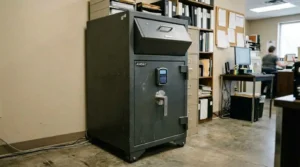
Yes, we are a Sentry Safe-approved support locksmith in NYC, along with handling home safes, fire safes, gun safes, cash safes, business safes, depositories, and vaults.
Bottom Line
A borescope turns safe opening from a destructive job into a repairable one. The technician makes one small hole at a point the manufacturer specifies, sees the lock mechanism directly, releases it, and repairs the access afterward. Most lockouts never reach that stage at all, since dead batteries, lockout timers, and mechanical faults account for a great many calls and resolve without drilling. What matters most is that the person working on your safe identifies it first and treats cutting as a last resort instead of a starting point.
NY City Safe provides safe opening, repairs, combination changes, lock upgrades, maintenance, and new installations across all five boroughs, 24 hours a day. Our technicians are licensed, certified, insured, and bonded, and consultations are free. We supply and install safes from Gardall, Brown, and Acme, with a manufacturer warranty on everything we sell.
Call (646) 499-1515 or contact NY City Safe to schedule 24-hour safe service anywhere in NYC.