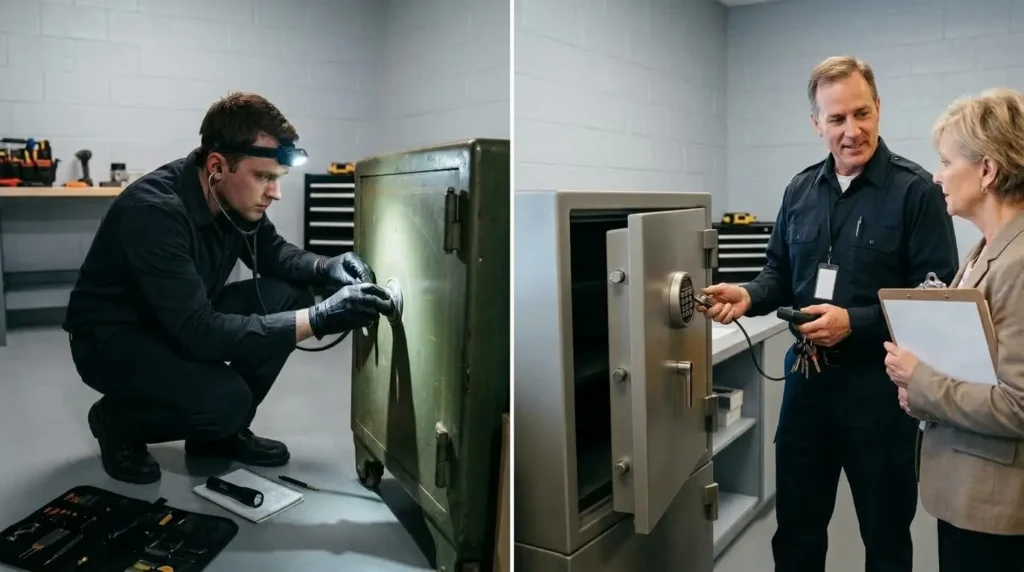
You know the combination, turn the dial, and nothing happens. Or the electronic keypad accepts the code, but the safe door stays locked. At that point, you may start searching for safe cracking or safe opening and wonder whether they describe two different services.
The terms overlap, but they are not always used in the same way. Safe opening is the broader service of restoring authorized access to a locked safe or vault. Safe cracking is a common term for gaining access when the normal key, combination, or lock operation is unavailable. A technician may perform safe opening without using what most people imagine as “cracking” at all.
What Does Safe Opening Mean?
Safe opening describes the result the owner needs: gaining lawful access to a safe that will not open normally.
The cause can be simple or mechanical. A person may have forgotten a combination. A key may be lost. An electronic lock may have a battery or wiring problem. A dial can become difficult to operate. Internal parts may become misaligned or worn.
ALOA, an association for security professionals with a Safe and Vault Technicians Association division, lists several common safe problems. These include jammed locks, combination issues, electronic keypad problems, lockout modes, and handle problems. Its guidance for safe owners also states that qualified safe technicians can repair, maintain, and open locked safes.
A professional opening service therefore starts by determining why normal access has failed.
Opening the door is only one part of the job. The technician may also need to repair the lock, correct an internal problem, change the combination, or determine whether a damaged component should be replaced.
What Does Safe Cracking Mean?
The phrase safe cracking has a stronger image because movies often connect it with forced entry or theft.
In legitimate locksmith and safe work, the term can simply mean opening a safe when the normal access method is unavailable.
ALOA uses similar language in its consumer guidance, stating that safe and vault technicians can “crack” open a safe when an owner is locked out.
That makes safe cracking less of a separate service category and more of a common name for certain safe-opening work.
Professional safe cracking should also be separated from unauthorized entry. Safe-opening work should only be performed for an owner or another person who has lawful authority to access the container. The service page also states that authorized safe cracking is legal and that access methods can vary according to the safe and lock involved.
Safe Cracking and Safe Opening Are Not Opposite Services
The easiest way to understand the difference is to treat one term as broader than the other.
Safe opening describes the complete professional service.
Safe cracking usually describes gaining access without normal credentials or through specialist safe-opening methods.
For example, consider a business safe with a failed electronic lock.
The customer requests safe opening because the door will not open. The technician diagnoses the lock and selects an access method. A customer might describe the same job as safe cracking because the safe has to be opened without normal keypad operation.
Both descriptions can refer to the same service call.
The language matters less than what happens to the safe during and after the work.
Does Safe Cracking Always Damage the Safe?
No. Safe cracking does not automatically mean cutting open or destroying a safe.
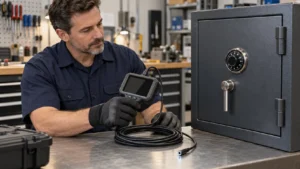
Professional safe technicians first consider the condition of the safe, lock type, failure, and available access options.
Some situations can be handled without altering the safe body. Other lockouts may require a controlled opening method that creates limited repair work afterward.
The safe-opening page for the client describes both mechanical and digital safe opening and states that the approach depends on the type of safe and the circumstances.
The important distinction is between the least invasive workable method and unnecessary damage.
A safe technician should understand what will happen to the lock and safe before choosing an opening approach.
What Is Non-Destructive Safe Opening?
Non-destructive safe opening means gaining access without making an opening in the safe body or causing damage that requires repair afterward.
Whether this is possible depends on the problem.
A forgotten mechanical combination presents a different challenge from a broken internal bolt mechanism. A dead electronic keypad is different from a safe that has been damaged during an attempted break-in.
The phrase “non-destructive” should therefore not be treated as a guarantee for every safe lockout.
A technician needs to inspect the safe and determine whether a non-destructive approach is practical before promising the result.
This is also why photographs, manufacturer information, model information, and an explanation of what happened before the lockout can help when requesting service.
Does Safe Opening Ever Require Drilling?
Some safes cannot be opened through a non-destructive approach.
In those cases, a trained safe technician may use a controlled drilling method or another professional technique appropriate for the safe. This should not be confused with randomly drilling through the door until something moves.
Modern safes can have security features intended to resist forced entry, which makes knowledge of the safe construction important.
The goal of professional safe opening is to gain access while limiting unnecessary changes to the safe and preserving the possibility of repair where practical.
A customer should ask what condition the safe is expected to be in after the opening and whether repair is included or quoted separately.
Safe Repair Can Be Part of the Opening Process
Opening a locked safe does not always finish the service.
Suppose the door opens, but the lock failed because an internal component is worn. Closing and locking the safe again without correcting the problem could leave the owner locked out a second time.
That is why safe and vault repair can follow a safe-opening job.
Repair can involve the lock or other components involved in normal safe operation. The exact work depends on what caused the lockout and whether the existing parts remain serviceable. The current service information covers repair and maintenance for both residential and commercial safes, including mechanical and electronic models.
A safe-opening quote should therefore answer two questions: how access will be restored and what needs to happen before the safe can return to normal use.
A Combination Change May Be Smarter After Safe Opening
Sometimes the safe opens correctly after service, but continuing to use the old combination is not the best next step.
This can happen when too many employees know a business safe combination, an employee has left the company, a home changes ownership, or the owner is no longer sure who has access.
Mechanical and electronic locks handle combination changes differently, so the correct process depends on the lock.
Changing the combination can also be useful when a technician has restored access after the owner forgot the previous code.
The key point is that safe opening restores access. Changing access credentials is a separate security decision.
Why Safe Type Changes the Opening Approach
There is no one method of safe cracking that applies to every container.
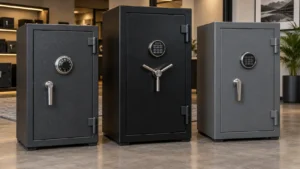
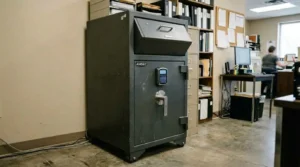
Home safes, fire safes, floor safes, wall safes, commercial depository safes, gun safes, high-security units, and vault doors can use different construction and locking systems.
Mechanical combination locks and electronic locks also fail in different ways.
This is one reason safe work is a specialist area within the broader locksmith field.
ALOA’s professional certification program includes specific safe and vault technician disciplines alongside other locksmith and security fields. Its certification information identifies specialized safe-technician credentials within its Proficiency Registration Program.
A technician who regularly works on door locks is not automatically experienced with every safe or vault.
What Information Should You Give a Safe Technician?
A useful service call begins with an accurate description.
Tell the technician whether the lock is mechanical, electronic, or key-operated. Explain what happens when you try to open it and whether the problem appeared suddenly or developed over time.
If available, provide the manufacturer and model.
Also mention if the safe was recently moved, damaged, subjected to an attempted break-in, or left unused for a long period.
Avoid repeatedly forcing the handle or experimenting with the lock after a mechanical problem appears. Added damage can make the original problem harder to identify.
Most importantly, be prepared to establish that you are authorized to access the safe.
Should You Search for Safe Cracking or Safe Opening?
Either phrase can lead you toward the same type of professional service, but safe opening is usually the clearer description of what you need.
You need access restored.
The technician decides how that can be done after evaluating the safe.
If you specifically search for safe cracking, focus less on the label and more on whether the provider works with safes and vaults, can explain the expected condition after opening, and can repair or service the safe afterward.
A professional should be able to discuss whether the first approach is expected to be non-destructive, whether an invasive method may become necessary, and what repair could follow.
Get the Safe Opened Without Turning One Problem Into Two
A forgotten combination is frustrating, but a lockout becomes more expensive when an unsuitable opening attempt damages a safe that could have remained serviceable. The same applies when a failed lock is opened but never repaired, leaving the owner at risk of another lockout.
NY City Safe provides safe opening and safe cracking services for residential and commercial safes in New York City, along with safe and vault repair, combination changes, lock upgrades, maintenance, moving, and installation. Its current site covers mechanical and electronic safe lockouts as well as situations where access methods need to be selected according to the safe and the cause of the problem.
If your safe will not open and you are unsure whether the problem is the combination, keypad, lock, or internal mechanism, contact NY City Safe to have the safe assessed before repeated opening attempts create another problem.