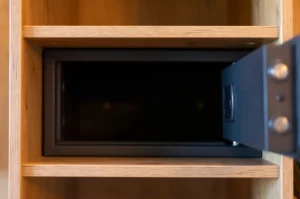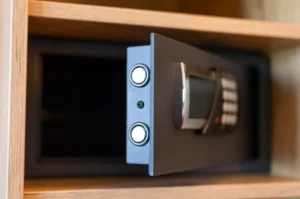
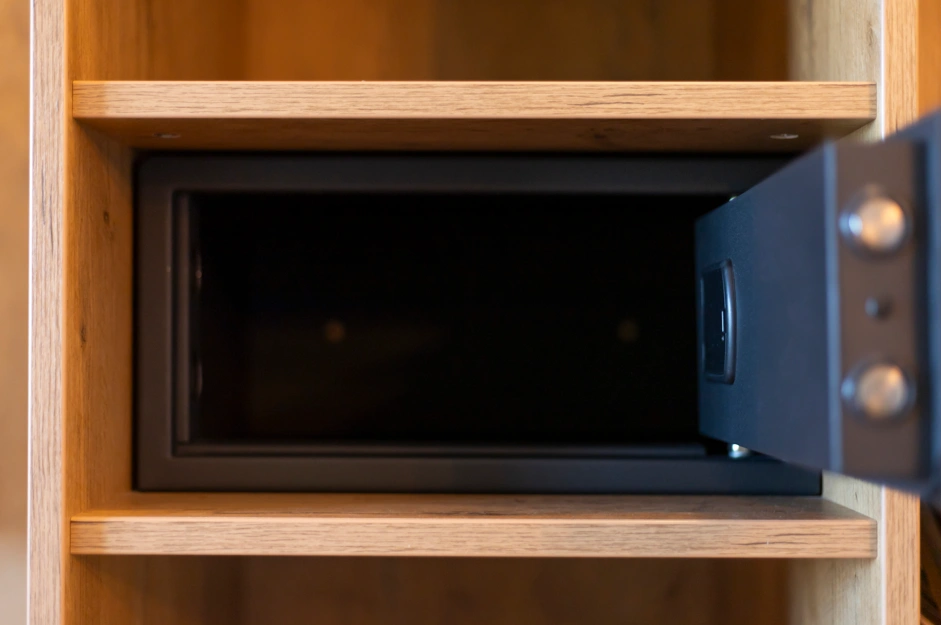
A burglar who cannot find your valuables cannot take them. That single idea sits at the center of why so many homeowners and business owners in New York now choose to hide their security rather than show it. Concealed wall safes slip into the space between your wall studs and disappear behind a picture, a mirror, or a shelf, which turns an ordinary wall into a quiet storage spot that most intruders will walk right past.
The logic holds up against the numbers. Burglars typically spend only 10 to 12 minutes inside a home searching for valuable items. In that short window, a thief goes for the obvious places first. When your safe is out of sight, you take it out of the search entirely. If you want to understand your options before you buy, our range of concealed wall-mounted safes gives you a starting point for both home and office setups.
A Thief Cannot Steal What He Never Finds
Most people assume a heavy safe is a safe one. Weight and steel matter, but they are not the whole story. A large floor safe that a burglar can see becomes a target, and a target gets attacked with tools, time, and force. A safe that no one knows exists never reaches that stage.
The most secure safe is not always the one made with the most steel, but rather the one that you cannot find. This is the core benefit behind every concealed wall safe. Thieves work under time pressure, and they cannot crack what they never locate. A well-placed unit behind a framed painting or a bathroom mirror gives you a layer of protection that a bolted floor safe in plain view cannot match.
Your Home and Your Office Both Have a Weak Spot Burglars Know
The value of hidden storage grows once you look at where break-ins actually happen. Offices and studies are common search spots, not just bedrooms. About 26% of burglars said they would search an office or study for valuables. For a business owner, that means the room where you keep cash, contracts, and client records is already on a thief’s list.
A wall safe answers this for both settings in a few clear ways:
- For homes: it keeps jewelry, passports, cash, and family documents out of the master bedroom, which about 75% of burglars target first.
- For offices: it secures petty cash, backup drives, deeds, and sensitive files without taking up floor space in a busy work area.
- For both: it stays reachable for daily use while remaining invisible to visitors, clients, or anyone passing through.
Because these units mount inside the wall cavity, they free up the floor and blend into the room. A business can install one inside a private office or supply closet, while a homeowner can tuck one into a bedroom closet where foot traffic stays low.
Also Read: What Are Burglary Safes and How Do They Work?
Where You Hide the Safe Matters More Than the Safe Itself?
Concealment only works when the safe goes somewhere a thief will not think to check. The wrong spot undoes the whole advantage. Since about 75% of burglars head for the master bedroom first, hiding a safe behind the nightstand painting in that exact room is a weaker choice than most people expect.
Better placement includes spots that draw little attention:
- Inside a closet behind hanging clothes
- In a home office or study, low on a side wall
- Behind a mirror in a hallway or bathroom
- Within a laundry or utility area
Getting the location and the fit right takes some judgment about your wall structure and daily habits. Our team offers a free consultation through our safe supply and installation service, so the safe ends up both hidden well and mounted securely into the framing.
Does a Wall Safe Need a Specific Wall Depth?
Yes, and this is where planning matters. Standard wall safes sit inside a shallow cavity, usually built for a 4-inch wall depth. Fireproof models need much more room. Wall safes that are fireproof are typically 12 to 15 inches deep, so you will need more room behind your wall. Knowing your wall type before purchase saves you from buying a safe that will not fit the space you had in mind.
Fire Destroys Paper Long Before You Ever Smell Smoke
Theft is one threat. Fire is the other, and it destroys the papers that are hardest to replace. Birth certificates, property deeds, wills, and business licenses turn to ash long before the flames reach them, because paper begins to char at a set temperature. A fire-rated wall safe slows that heat.
Fireproof wall safes use insulated steel panels to help shield contents during a fire while still mounting cleanly between wall studs. The rating tells you how long the inside stays protected. A Class 125 rating, for example, resists heat up to 1,550 degrees Fahrenheit and keeps the interior at 125 degrees or less for one or two hours. For a home office or a small business, that window can be the difference between recovering your records and starting from nothing.
One point worth knowing: not every wall safe is fireproof, and the label matters. Always verify the model’s certified fire rating before storing irreplaceable documents, and look for UL-listed fireproof protection to be certain. A quick check of the rating protects you from a false sense of security.
Open It in Seconds, Yet Nobody Knows It Is There
A safe that is hard to reach becomes a safe you stop using. Concealed wall safes avoid that problem because they mount at a comfortable height, higher off the floor than a floor safe, which means no kneeling or bending each time you need something. They are located at a higher level off the floor, so access to this safe is easier.
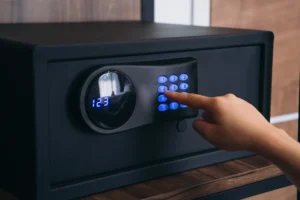
Modern locking options make daily use quick. Digital keypads open with a code in seconds, while mechanical dial locks give you a battery-free option that never needs a power source. City Safe stocks concealed units with both digital and mechanical locks, so you can match the safe to how you actually live or work. If your current safe uses an outdated lock, our lock upgrade service brings it up to modern standards without a full replacement.
What Should You Store in a Concealed Wall Safe?
These safes suit small, high-value items rather than bulk storage. Good candidates include:
- Cash and emergency funds
- Jewelry, watches, and family heirlooms
- Passports, birth certificates, and legal papers
- Backup drives, spare keys, and small electronics
- Business documents, deeds, and licenses
For items that are very heavy or valued far above what a compact wall unit holds, a burglary-rated floor safe or a larger standing safe fits better. A short consultation helps you split your valuables between the right kinds of storage.
Add Security Without Losing a Single Square Foot
Room is scarce in most New York homes and offices, and a bulky standing safe eats into it. A concealed wall safe uses space that already exists inside the wall, so it adds security without shrinking your usable area. Installing it in a closet or office keeps it out of high-traffic areas while conserving space.
This makes wall safes a strong fit for apartments, small offices, and retail back rooms where every square foot counts. You get protected storage and a clean, uncluttered room at the same time, with nothing sticking out to signal that valuables are near.
What a Wall Safe Will Not Do, and Why That Is Fine?
Honest guidance means covering what a wall safe does not do well. These units are compact by design, so they will not hold large quantities or oversized items. They are typically not very large and cannot store very much due to wall thickness limitations. There is also a structural point to weigh. If a burglar does find the safe and has enough time and tools, the surrounding wall is often wood framing, which is less resistant than a safe anchored into a concrete floor.
This is exactly why concealment and placement carry so much weight with wall safes. The hiding spot is your first line of defense, and a skilled installation into solid framing is your second. For very high-value storage, pairing a concealed wall safe with a heavier burglary-rated unit gives you both secrecy and brute strength. A safe specialist can help you decide which mix fits your home or business.
Protect What Matters Now, Because Burglars Do Not Wait
Every unprotected drawer and filing cabinet in your home or office is a gamble against a clock that favors the thief. Residential burglars most often go for cash, jewelry, and small electronics, the exact items a concealed wall safe is built to guard. Waiting until after a loss means the cash is gone, the heirlooms are unrecoverable, and the documents may be impossible to replace.
You can close that gap now. City Safe helps homeowners and business owners across Manhattan, Brooklyn, Queens, the Bronx, and Staten Island choose, install, and conceal the right wall safe for their space, with certified technicians and a free consultation to guide every step. Reach out through our contact page and turn a plain wall into the safest spot in your property.