A break-in almost never gives you a warning. One night, the shop is locked and quiet. By morning, the back office is pried open and the weekend cash is gone, along with the sense that your space was ever secure. For a business owner in New York, that loss is rarely just money. It is payroll, rent, and the trust of people who counted on you. This is the exact problem that burglary safes were built to solve, and understanding how they work helps you buy the right one instead of the wrong one.
What is a Burglary Safe and Why Businesses Rely on One?
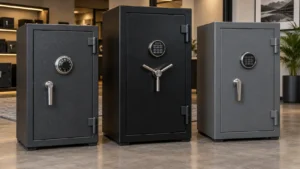
A burglary safe is a storage container built to slow down and defeat a physical attack. The whole point is resistance against force, so the steel is thicker, the door fits tighter, and the lock is shielded from tools that a thief would bring along. The FBI defines burglary as the unlawful entry of a structure to commit theft, and its data has put the average loss per burglary at around $2,661. In a busy commercial area, one incident can cost far more once you add damaged property and lost trading days.
Many people mix up two very different products. A fire safe protects paper and drives from heat. A burglary safe protects cash and valuables from hands and tools. The insulation that stops fire does little against a crowbar, and the hardened steel that stops a drill does little against a house fire. Some models combine both jobs, which is why the fire and burglary safes on our shelves stay popular with restaurants and retail shops. Still, if theft is your main worry, burglary resistance is the feature you should study first. That is what separates a burglary safe from a plain metal box with a lock.
How Burglary Safes Work to Stop a Break-In?
No safe is truly break-proof. What a good one does is buy time, and time is what a burglary safe uses as a weapon. Most thieves spend under ten minutes on a target because every extra minute raises the chance of getting caught. A burglary safe stretches that clock past the point where the job stays worth the risk. It does this through three working parts that act together.
The Boltwork That Holds the Door Shut
When you turn the handle, thick steel bolts slide out of the door and lock into the frame. This is the boltwork, and it is the muscle that keeps the door from being pried open. On a quality burglary safe, these bolts are heavy and sit on more than one side of the door, so a pry bar has nothing easy to grab. The lock itself does not hold the door. Instead, the lock releases the boltwork only when the right combination or code is entered. Take away the correct entry, and the bolts stay planted.
Hardplate That Fights Off Drills
A thief who cannot pry the door will often try to drill through it to reach the lock. To block this, makers place a hardplate between the door skin and the lock. This plate is made of hardened steel, and some use tungsten carbide chips or loose ball bearings that spin and wear a drill bit down to nothing. The idea is simple. Every second the drill spends grinding against that plate is a second the thief is not getting inside. A good hard plate turns a five-minute plan into an hour of frustration.
Relockers That Trap the Safe Closed
The last layer is the smartest. A relocker is a hidden device that fires when the safe is attacked, and once it fires, the safe locks itself down for good until a technician opens it. Relockers come in a few forms:
- Glass relockers sit behind the lock as a pane of tempered glass. Drill or punch into it, and the glass shatters, which drops spring-loaded bolts that freeze the boltwork.
- Mechanical relockers trigger when the back of the lock is forced off, snapping pins into the door frame.
- Heat relockers melt at a low temperature, so a torch attack sets them off and seals the door.
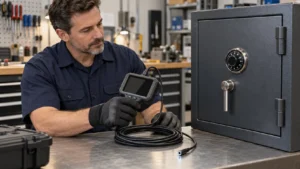
This is why a trained locksmith never beats a safe with brute force. Forcing it can trip the relocker and turn a simple opening into a long, careful job. For a thief on a schedule, a tripped relocker ends the attempt.
Burglary Safe Ratings You Should Know Before Buying
Not every safe marked for security offers the same protection, and the labels tell the real story. Two systems are in play. Insurance companies rate safes on construction, while Underwriters Laboratories tests how long a safe survives a live attack. That test uses a measure called net working time, which counts only the seconds a tool is touching the safe. Here is how the common levels break down for a burglary safe:
- B-Rate: A basic level with no live testing. The old standard was a quarter-inch steel body and a half-inch door. Good entry protection, best for lower-value contents.
- C-Rate: A step up in steel, with a half-inch body and a one-inch door.
- UL RSC: Tested to hold against hand tools for five minutes of net working time. A trusted baseline for shops and homes.
- UL TL-15: Tested for fifteen minutes against a wider tool set, built from an inch of solid steel or the equivalent.
- UL TL-30: Tested for thirty minutes with power saws and grinders added. Jewelry stores are often required by their insurers to store stock in a TL-30, which shows the level of trust it carries.
The higher you climb, the longer the safe fights and the more it can safely hold. A rating is not marketing. It is a promise that a professional tried to break under set rules and failed. If you are protecting high-value stock, our high security safes sit at the top of this scale.
Which NYC Businesses Need a Burglary Safe the Most?
Any business that handles cash or valuables after hours is a target, and in a dense city, the risk climbs. Restaurants and bars hold days of takings before a bank run. Retail stores keep float money and returns. Medical and dental offices store controlled items and patient records. Jewelry and watch shops carry stock that a thief can pocket in seconds. For all of these, a burglary safe is the difference between a bad night and a closed business. This is why our range of business safes leans toward heavier steel and stronger locks than a light home box would offer.
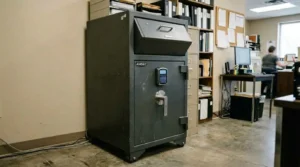
Cash-heavy operations often pair a burglary safe with a drop slot, so staff can deposit money throughout the day without opening the main door. That way, the cash leaves the register fast and sits behind hardened steel where a robber cannot reach it. The less time money spends in an open till, the smaller the prize for anyone watching your floor.
How to Pick the Right Burglary Safe for Your Property?
The right choice comes down to what you are protecting and where the safe will live. A few points guide the decision:
- Value of contents: Match the rating to the risk. Cash and jewelry call for a TL-15 or TL-30. Documents and small items may be fine with an RSC or B-Rate burglary safe.
- Weight and placement: Heavier safes resist being carried off, but a lighter one must be bolted down. A thief will happily take the whole safe if they can lift it.
- Lock type: A dial lock needs no battery and lasts for decades. A digital lock gives faster access for busy staff. Both can be serviced or swapped later.
- Fire risk: If your papers matter as much as your cash, a combined fire and burglary model covers both threats in one body.
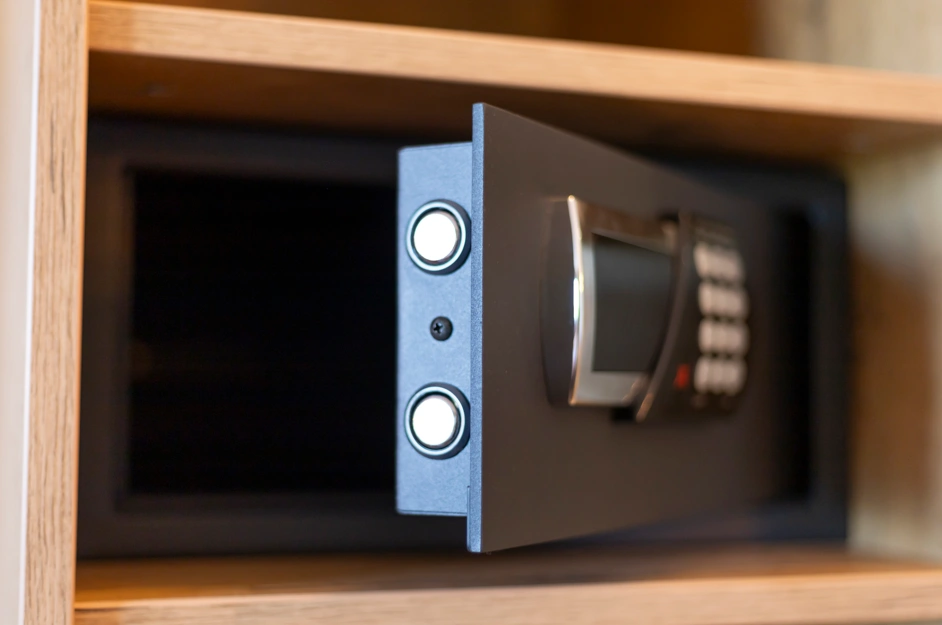
Homes have their own answer. For a residence, a floor safe hidden under carpet or tile gives strong theft protection with almost no visible target, since a thief cannot steal what they cannot find. Our floor safes work well for apartments and houses where space is tight and discretion matters. The rest of the choices stay the same. Rating, weight, and lock decide how well the safe holds up.
Why Installation Decides How Well Your Safe Protects You?
A burglary safe only performs when it is set correctly. A safe that is not anchored can be tipped, dragged, or hauled out the door, and once it is off your floor, a thief has all night to open it in private. Proper anchoring bolts the safe into concrete or a structural floor, so it stays put during an attack. Placement matters too. A safe tucked out of sight and away from the street gives a burglar less confidence and less room to work. This is the exact reason careful, safe supply and installation are worth as much as the safe itself. The best steel in the world fails if the box can walk away.
Protect Your Business Before the Next Break-In Finds You
A burglary rarely announces itself. It shows up on a slow Tuesday or a holiday weekend, and by the time you know, the choice you made months ago is the only thing standing between a thief and everything you worked for. The right burglary safe, rated for your risk and bolted down where it belongs, is a choice made well. The wrong one, or none at all, is a gap that a criminal will find.
At NY City Safe, our certified technicians help New York businesses and homeowners select, install, and service the correct burglary safe for their space, and we back every job with expert advice on rating, placement, and locking systems. If you want to close that gap before someone else finds it, reach out to our team and let us match you with a safe that holds when it matters most.