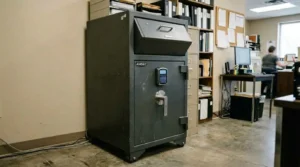
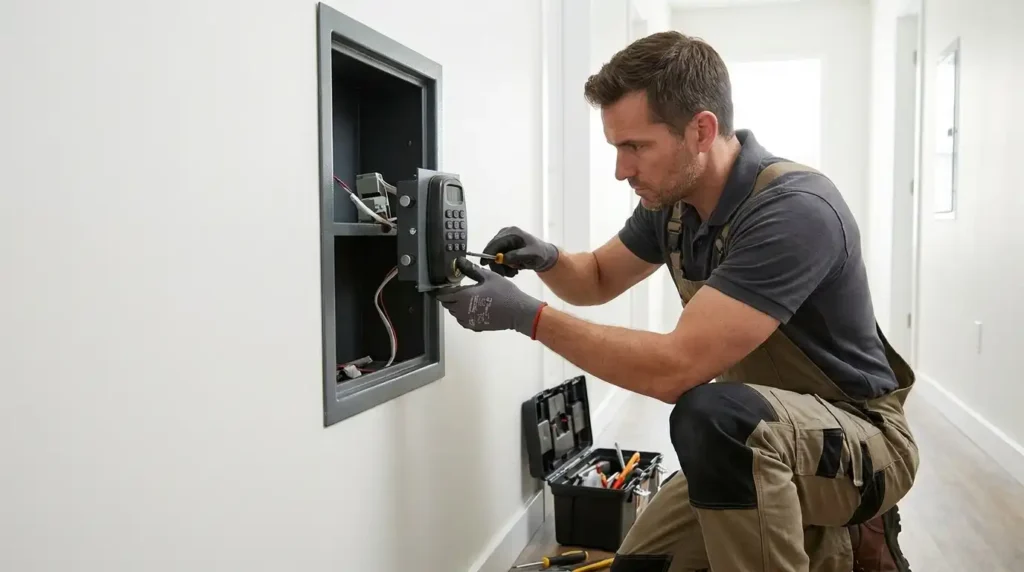
More people in New York City now use digital safes to protect cash, jewelry, private documents, and even firearms. A safe box is just a metal container if the lock does not work properly. A properly fitted safe lock keeps unwanted hands out and lets you get in quickly when you need to. That is why safe lock installation must be done carefully from the start.
This guide explains the basics of digital safe locks. You will learn about different lock types, common problems that develop over time, and how to tell when your lock needs repair. We also cover what a professional installation looks like and how regular maintenance can keep your safe working for years.
What Is a Digital Safe Lock?
A digital safe lock uses electronics instead of a standard key or a spinning dial. Most models have a numbered keypad for entering a code. Some include a fingerprint reader, while others connect to your phone via Bluetooth or Wi-Fi.
When you enter the correct code or scan the right finger, a small motor moves the locking bolts, and the safe door opens. These locks run on batteries, and some also include a hidden backup key slot in case the battery dies. The idea is to give you quick access without having to hide a physical key that someone might find.
Also Read: Digital vs Mechanical Safes: Which Is Better?
Common Types of Digital Safe Locks
Here are the digital lock styles you will most often see in homes and small offices.
- Keypad locks: You enter a four to eight-digit passcode. Changing codes is simple, and you can give temporary codes to family members or cleaners.
- Biometric locks: These scan fingerprints and open quickly, and no one can guess a code. Good for when several people use the same safe because you can store multiple prints.
- Smart locks: These connect to a phone app. You can lock or unlock the safe from a short distance and get alerts if someone tampers with it.
- Dual-access locks: These need both a keypad code and a physical key. They add an extra layer of security for sensitive items.
No matter the type, the lock must be installed properly to keep the safe truly secure.
Also Read: Best Types of Safes for NYC Apartments in 2026
Why Safe Lock Installation Must Be Done Right
If a lock isn’t flush with the door, the bolts may not fully engage. A loose keypad can let in dust and moisture, which can cause the electronics to fail prematurely. Wires pinched during installation can short out later, leaving you locked out. A professional safe installation starts with checking the door alignment, bolt throw, and the condition of the battery box. A trained technician will mount the lock so every part lines up perfectly, then test it repeatedly before handing it over.
Many digital locks have a small keyhole hidden behind a faceplate. If the installer does not fit this part properly, the key may not work in an emergency. You could end up drilling the safe open, which would ruin it and cost a lot of money. Spending a little more on a professional installation gives you peace of mind every day.
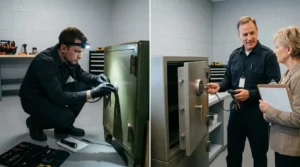
What Happens During a Professional Safe Lock Installation
When you hire someone to install a safe lock, the process usually follows clear steps. Here is what to expect, so nothing feels surprising.
- The technician inspects the safe and the door where it will be mounted.
- They remove the old lock when you upgrade from a dial lock to a digital padlock.
- The new lock gets seated, and the mounting screws are tightened evenly.
- The wire harness is connected and tucked away neatly so nothing gets pinched.
- Batteries are loaded, and the lock is tested several times.
- The tech programs a master code and walks you through setting your own code.
- They show you how to use the backup key and change the batteries later.
After installation, you test the code yourself and watch the bolts slide open and close. The technician makes sure the keypad is at a comfortable height and that the door opens fully without hitting a wall. Every detail matters when you rely on a safe to protect irreplaceable items.
Signs Your Digital Safe Lock Needs Repair
Even a quality lock can act up after years of daily use. Watch for these warning signs so you can fix small problems before they turn into a full lockout.
- The keypad beeps, but the door does not open.
- The lights flicker, or the display shows odd characters.
- The fingerprint scanner does not recognize your print, even after cleaning it.
- You hear a grinding sound when the bolts move.
- The safe door pops open without entering the code.
- The battery drains in just a few weeks.
- The buttons feel stuck or require a very hard press.
Sometimes the fix is simple, like changing old batteries. If fresh batteries do not help, the issue could be a faulty wire, a broken motor, or a failing control board. At that point, do not try to force the safe open. That often makes the problem worse and more expensive to repair.
Also Read: When to Call a Professional for Safe Opening Services
Simple Ways to Keep Your Digital Safe Lock Working
Regular care keeps the lock fast and trouble-free. These steps take only a few minutes.
- Replace the batteries every 6 to 12 months, even if the low-battery light has not flashed yet.
- Wipe the keypad and fingerprint sensor with a dry, soft cloth. Do not spray liquids directly on the lock.
- Once a month, open the safe with the backup key to confirm the override still works.
- Keep the inside of the safe dry. A small silica gel pack helps fight humidity.
- Close the door gently, slamming it can knock the lock out of alignment over time.
- If the safe is bolted to the floor, check the bolts twice a year to make sure they are tight.
Following these steps can add years to your digital lock’s life and reduce repair costs.
Also Read: Safe Maintenance Checklist for Homeowners and Businesses
NYC City Safe: Your Partner for Safe Security
If you live in New York City and need a safe lock installed or repaired, NYC City Safe is ready to help. Our locksmiths work on all common digital lock types, including keypad, biometric, and smart locks. We handle everything from a simple battery swap to a full safe lock installation for a newly purchased safe. Our trucks carry parts for many major safe brands, so we can often complete the repair in one visit.
Whether you’re in a Brooklyn apartment, a Queens office, or a Manhattan store, we come to you quickly. We know how stressful it is when your safe won’t open. That’s why we answer calls promptly and give you a clear arrival time.